
 Michael Caine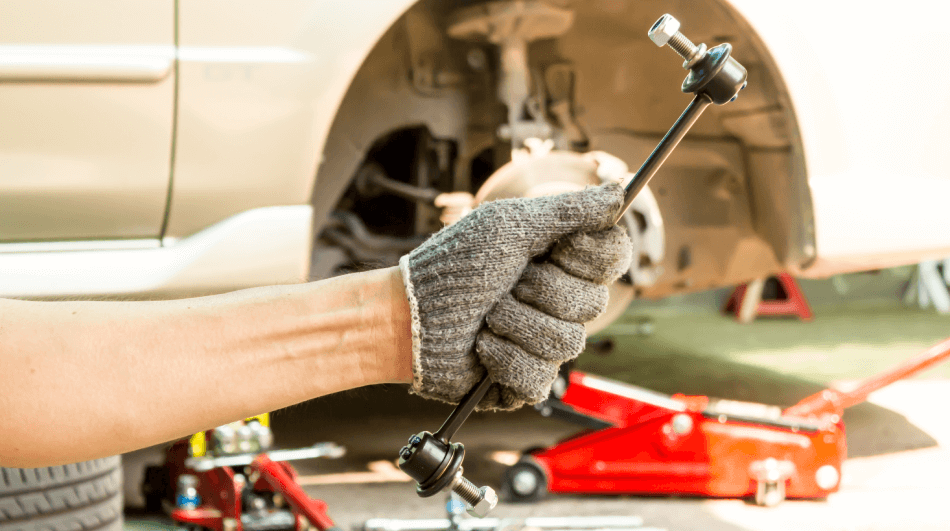
A small clatter at the curb cut can say more than a loud bang ever will. When sway bar link wear starts, the first warning is often a hollow tap, knock, or rattle that shows up over speed bumps, broken asphalt, driveway lips, and patched city streets. The car may still track straight. The steering may still feel normal. That is why drivers put it off.
Bad idea.
The part is small, but its job sits right in the middle of body control. It helps the stabilizer bar tie one side of the suspension to the other, so the vehicle stays flatter when weight shifts. Once the joint loosens, the metal has room to chatter. You hear it before you feel it. For U.S. drivers dealing with potholes, salt, steep driveways, and uneven neighborhood roads, that early sound matters. It can keep a cheap repair from turning into a hunt through the whole suspension. For more plain-English car ownership guidance, practical auto maintenance insights can help readers connect small symptoms with smarter repair choices.
Why Worn Sway Bar Link Symptoms Show Up First Over Small Bumps
The strange part is how gentle roads can expose the problem better than hard driving. A worn connector does not need a deep pothole to make noise. It needs quick, uneven wheel movement, the kind you get from washboard pavement outside a school, a raised manhole cover in Chicago, or a short concrete seam in a Texas parking lot. The suspension moves fast, the stabilizer bar twists, and the loose joint taps against its seat.
Take a mid-size sedan leaving a gas station in Ohio. The front left wheel drops off the apron first, then the right follows a beat later. That staggered movement twists the bar and loads the end link in two directions. A tight joint absorbs it. A tired one clicks like a loose socket in a toolbox.
The noise usually comes from looseness, not total failure
Most drivers picture a broken part hanging under the car. That can happen, but the usual first stage is less dramatic. The ball-and-socket joint inside the end link dries out, corrodes, or wears enough to create play. The part is still attached, yet it no longer holds steady under quick load changes.
That tiny gap is enough. When the wheel rises over a bump, the bar twists and the link gets pulled or pushed. Instead of moving as one tight piece, it clicks, knocks, or chatters. That is the sound many people describe as rattling over bumps, especially near the front wheels.
The counterintuitive part is that a louder rattle does not always mean a more dangerous condition than a quieter thud. Thin metal brackets and short links can carry sound through the chassis like a bell. A quiet control arm bushing can be more worn than a noisy stabilizer connector. Noise points you toward the area, not the full verdict.
Why slow streets can reveal more than highway driving
At highway speed, steady pavement keeps the suspension loaded in one direction for longer stretches. Air noise, tire hum, and engine sound also cover light chassis chatter. Around town, the car is quieter and the suspension is busy. That is when a loose link gets room to complain.
You may hear one sharp knock when entering a driveway at an angle. You may hear a series of taps on brick streets or older concrete roads. Many owners first notice it in a grocery store lot, not on the interstate. The car crosses a small ridge with one wheel, then the other, and the sound comes from low and near the corner.
This is why a test drive for front suspension noise should include slow, uneven surfaces. A smooth loop around the block can miss it. A decent shop will listen over small bumps, turn through a parking lot, and compare left-side and right-side noises before blaming struts or shocks. That method saves money because the cheapest-sounding part is not always the cheapest guess.
How to Separate End Link Noise From Other Front Suspension Noise
Once a rattle starts, the hard part is not hearing it. The hard part is naming it. Several suspension parts can knock, and the wrong guess can burn through a repair budget. End links, strut mounts, control arm bushings, tie rods, ball joints, and brake hardware all live close enough to fool your ear from the driver’s seat.
A better approach is to study the pattern. A stabilizer connector tends to make noise when one side of the suspension moves differently from the other. A steering part may complain more during turns. A brake pad clip may rattle until you lightly press the pedal. Pattern beats panic.
Struts, bushings, and ball joints tell different stories
A worn strut mount often makes a dull clunk with steering input, especially while turning into a parking space. A weak strut can bounce or feel floaty after a dip. A bad lower ball joint may knock over bumps but can also create looseness during braking or steering. Those are not the same story.
Stabilizer bar links tend to sound lighter and sharper. The rattle often sits near the tire area, not deep under the floor. The vehicle may still ride flat enough in a straight line, which leads some drivers to think the noise is harmless trim or a loose splash shield. Sometimes it is. Often, it is metal movement in a loaded suspension part.
One simple clue helps: does the noise get worse when only one wheel hits a bump? Railroad tracks crossed straight-on may make less noise than a diagonal driveway entrance. That points toward the anti-roll system because it works hardest when the left and right wheels are at different heights. It is not proof, but it is a useful lead.
The parking-lot test that can save a wrong repair
A careful parking-lot test can narrow the suspect list before any wrench comes out. Drive slowly over a shallow curb cut at an angle, first with the left front wheel, then with the right. Keep the radio off and the windows slightly down. Listen for a tap near one corner.
Next, roll across a mild row of uneven pavement at walking speed. If the noise sounds like rattling over bumps but fades on smooth asphalt, the end link area deserves inspection. Light brake pressure during the test can also help rule out pad hardware. If the noise changes under braking, the shop should look beyond suspension.
Do not do hard swerves or unsafe maneuvers in traffic. This is not a stunt test. It is a low-speed listening routine. A driver in Phoenix with dry bushings and a driver in Buffalo with rusted hardware may hear similar sounds, but the repair path can differ. Heat dries rubber. Salt attacks threads. The symptom overlaps, while the cause behind the stuck fastener may not.
For readers comparing related symptoms, common front suspension noise causes is a good internal place to connect clunks, rattles, and steering feel without lumping every sound into one repair.
What Happens If You Keep Driving With A Loose Stabilizer Connection
It is tempting to treat the noise as an annoyance. The car starts, stops, and turns. Nothing leaks. No warning light comes on. That calm is what makes the repair easy to delay. Yet the suspension is giving you a message before the failure grows teeth.
The risk is not that the wheel suddenly falls off because one end link rattles. That is usually not how this part fails. The bigger problem is loss of control margin. You may not notice that margin on a dry Tuesday commute. You may need it during a fast lane change, a wet off-ramp, or a sudden swerve around debris on I-95.
Handling changes often arrive quietly before they feel dangerous
When the link gets loose or breaks, the stabilizer bar cannot do its job at that corner with the same control. The vehicle may lean more in turns. On taller SUVs and crossovers, the change can feel like extra roll or a delayed set after you turn the wheel. It may not scare you at first.
That is the trap.
Drivers adapt without noticing. You take ramps slower. You leave more steering correction in the wheel. You blame tires, wind, or road crown. By the time the change feels obvious, the failed part may have already stressed nearby bushings or mounts. Stabilizer bar links are small, but they work in a system that punishes loose pieces.
The non-obvious insight here is that noise can be a gift. A rattle gives you a cheap clue before the car feels sloppy. Silence can be worse when a rubber bushing absorbs motion without calling attention to itself. A noisy link is irritating, but it often gives you time.
Tire wear and alignment clues should not be ignored
A loose end link alone does not set toe or camber the way a bent control arm can. Still, worn suspension pieces tend to arrive as a group on older vehicles. If your tires are cupping, feathering, or wearing more on one shoulder, do not stop the inspection at the noisy part. Ask for the front end to be checked as a whole.
Consider a ten-year-old crossover in Pennsylvania. The owner hears a rattle, replaces one connector, and the sound improves. Two months later, the tire shop points out inner-edge wear. The first repair was not wrong. It was incomplete. The same potholes and winter salt that damaged one part may have been working on the rest.
That is why a good repair ticket should not read like a parts toss. It should say which side had play, whether the boots were torn, whether the stabilizer bar bushings looked worn, and whether the tires showed a pattern. If a shop cannot explain the finding in plain language, slow the process down.
You can also check the NHTSA recall lookup by VIN when a suspension issue seems tied to a known defect or repeated model complaint. Recalls are not the answer to most rattles, but they are worth checking before you pay for work that may already be covered.
Replacement Choices, Repair Costs, and What A Shop Should Check
This repair is often more about diagnosis and access than part size. The link itself is usually small and easy to see. The job can still turn sour when rust locks the nut, when the hex socket strips, or when an aftermarket part does not match the factory angle. A clean Southern car and a salt-belt truck are not the same repair.
The best shops know this. They quote with room for stuck hardware, inspect both sides, and avoid promising that one small part will cure every sound. That honesty matters. Suspension noise can stack. Fixing the loudest rattle may reveal a softer clunk that was hiding underneath.
On older pickups and family SUVs, that second sound may come from a bar bushing that looked acceptable until the loose connector stopped masking it. One repair can clear the stage for the next symptom.
Cheap parts can be fine, but cheap diagnosis gets expensive
There are plenty of decent aftermarket end links. Some have grease fittings, thicker studs, or better boots than the worn original piece. Others fit on paper but place the joint at an odd angle once the vehicle is back on the ground. That can shorten its life or cause noise to return.
The mistake is shopping by the part price alone. A low-cost connector installed after a careful inspection can be a smart repair. The same part installed because someone guessed from a sound clip can waste money. Diagnosis earns its keep here.
Ask whether the technician checked the vehicle with the suspension loaded. Some play is easier to feel when the car is on ramps or a drive-on lift rather than hanging by the frame. When the wheels droop, the link may bind in a way that hides looseness. A rushed inspection can miss that.
This is also where stabilizer bar links should be compared side to side. If the left one is loose and the right one has a torn boot, replacing both may make sense. If one side was replaced last year and remains tight, automatic pair replacement may be less convincing. Context beats a blanket rule.
What to ask before approving the repair
You do not need to speak like a mechanic to ask better questions. Start with the noise location, the failed side, and what moved during inspection. Ask whether the stabilizer bar bushings were checked. Ask if the shop heard the same rattle on the test drive. A good technician will not mind.
Here is a short sequence that keeps the conversation clean:
- Which side has play, and can you show me where?
- Are the boots torn or is the joint loose inside?
- Did you inspect the bar bushings and nearby steering parts?
- Will the car need an alignment after this specific repair?
- Is rust likely to add labor on my vehicle?
The alignment question matters because many end link jobs do not require one by themselves. Yet if the shop also replaces tie rods, control arms, or struts, the answer changes. The right question protects you from both over-selling and under-repairing.
For broader planning, when to replace worn suspension parts can help you group repairs by safety, tire wear, and labor overlap instead of chasing one noise at a time.
The final check should be a second test drive. Not a lap around the building. The vehicle should cross the same type of bumps that exposed the noise. If the rattle is gone but a deeper clunk remains, that is new information, not a failed repair by default. An honest shop will separate the solved symptom from the next one.
Conclusion
The best time to deal with a chassis rattle is before it teaches you a more expensive lesson. Small suspension noises are easy to dismiss because they rarely feel urgent on day one. Yet the sound has a pattern, and that pattern can lead you toward a fair repair.
A worn sway bar link does not always announce itself with poor handling right away. More often, it starts as a light knock over broken pavement, then grows into a sound you plan your route around. Fixing it early protects the parts around it, keeps the vehicle calmer in sudden maneuvers, and removes the guesswork from future inspections.
Do not treat every rattle as a disaster. Treat it as evidence. Listen for when it happens, where it seems to come from, and whether braking or turning changes it. Then ask a shop to prove the loose part before replacing it. Good diagnosis is not fancy. It is patient, specific, and honest about what the road test showed. That one habit can save money, tires, and trust.
Frequently Asked Questions
Why does my car rattle over bumps but drive fine on smooth roads?
A loose end link often makes noise only when the suspension moves quickly from side to side. Smooth pavement keeps the chassis settled, so the part stays quiet. Small bumps, driveway angles, and rough parking lots create the quick motion that exposes the looseness.
Is it safe to drive with a bad stabilizer connector?
Short local driving may be possible, but it should not become a long-term plan. The vehicle may lose some body control during quick turns or sudden lane changes. Have it inspected soon, especially if the noise is getting louder or handling feels less settled.
How can I tell if the rattle is from brake hardware instead?
Lightly pressing the brake pedal during a slow test over rough pavement can change a brake-related rattle. If the sound fades under brake pressure, pad clips or caliper hardware may be involved. Suspension noise often stays the same when the pedal is touched.
Do bad stabilizer bar links cause steering wheel vibration?
They are not the most common cause of steering vibration. Wheel balance, tire damage, warped brake rotors, or worn steering parts are more likely. Loose stabilizer bar links usually create knocking, tapping, or rattling sounds over uneven road surfaces.
Should both end links be replaced at the same time?
Often, yes, especially on older vehicles where both sides have seen the same mileage, weather, and road damage. Still, inspection should decide. If one side is recent and tight, replacing only the failed side can be a fair repair.
Will replacing an end link require an alignment?
Usually not by itself, because the part does not set wheel angle. An alignment may be needed if other steering or suspension parts are replaced at the same time. Ask the shop which parts affect alignment before approving extra work.
Why is the noise louder in cold weather?
Cold temperatures can stiffen rubber and grease, making small gaps easier to hear. In snowy states, road salt also speeds corrosion around joints and hardware. A sound that appears each winter may come from both material stiffness and wear that has grown over time.
What is the best way to confirm the part is bad?
A road test plus a physical inspection is best. The technician should listen over the right kind of bumps, then check for looseness, torn boots, worn bushings, and side-to-side differences. Guessing from sound alone can lead to the wrong repair.