
 Michael Caine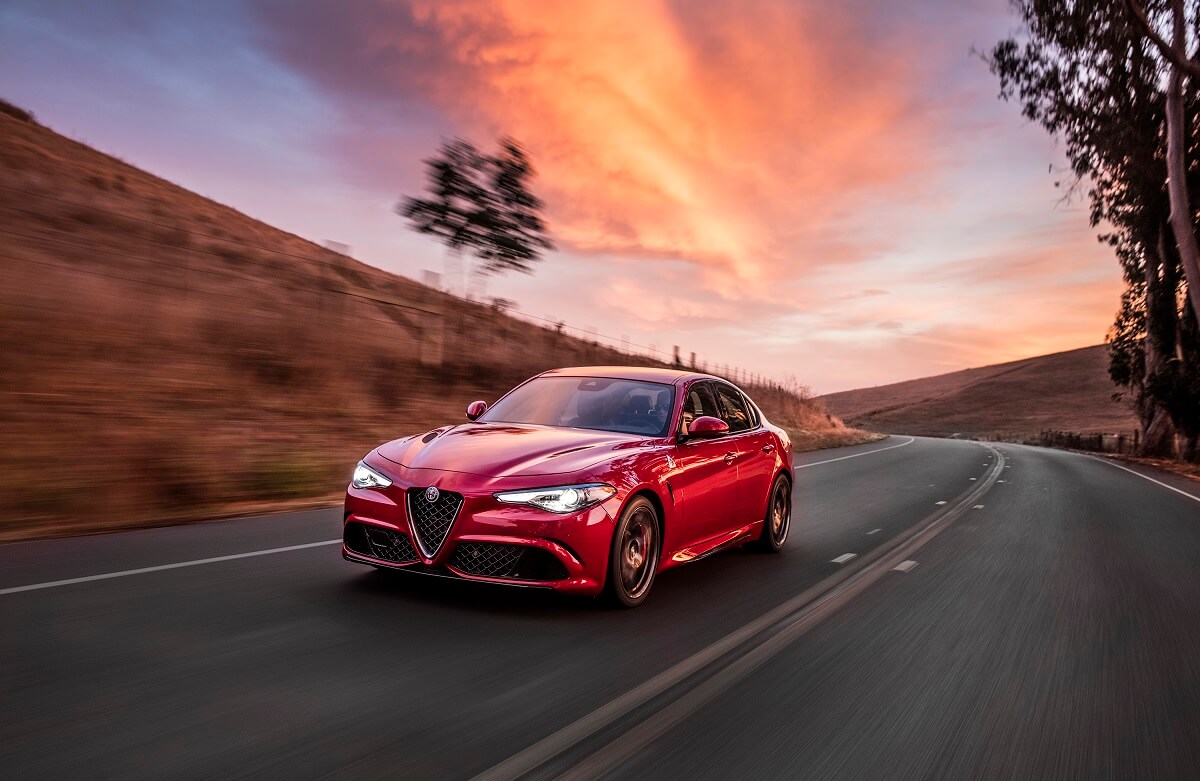
A Giulia can make a skilled technician feel like the car is arguing back. The problem with Giulia electrical gremlins is not that every fault is dramatic. It is that small voltage drops, weak grounds, module wake-ups, and stored faults can look like bigger failures than they are. A U.S. owner may see dashboard warning lights for stability control, start-stop, power steering, parking sensors, or driver aids, then find the car drives normally the next morning. That gap between warning and reality is where frustration starts.
The Giulia is a sharp sports sedan, not a simple appliance. Its networked modules talk constantly, and one poor signal can make several systems complain at once. For owners comparing repair notes through common European sedan repair costs, the best approach is patient diagnosis, not parts swapping. Check battery health first. Check charging behavior next. Then look for water entry, connector fit, wiring harness faults, and software updates. A mechanic who treats the car like an old-school sedan will chase shadows. A mechanic who follows voltage, data, and sequence will usually find the story.
Why Giulia Electrical Gremlins Confuse Good Shops
Many repair shops are good at broken parts. They are less comfortable with broken conversations between modules. That matters on the Giulia because a single weak input can trigger several warnings that seem unrelated. The owner sees a Christmas tree on the cluster. The mechanic sees a scan report full of codes. The hard part is deciding which code spoke first.
Low Voltage Can Pretend to Be a Bigger Failure
Battery drain problems are the first place to look because the Giulia is picky about voltage. A battery that still starts the engine can be too weak for clean module behavior. That sounds odd until you think about what happens before the starter turns. The body control module wakes, security checks run, sensors report, the steering system initializes, and the infotainment unit comes alive.
A marginal battery can pass a casual parking-lot test and still cause nonsense. You may see start-stop unavailable, stability control warnings, lane assist errors, or a power steering message after the car sits through a cold night in Ohio or Pennsylvania. Then the warning clears after a drive. That does not mean the car healed itself. It means voltage came back high enough for the network to calm down.
The non-obvious part is that the battery can be the cause even when the alternator is fine. Many owners expect a weak battery to show up as slow cranking. On a Giulia, it may show up as electronic noise first. A proper shop should test resting voltage, cranking voltage, charging output, battery age, and parasitic draw. Guessing from a green test light is not enough.
Stored Codes Need Order, Not Panic
Dashboard warning lights can scare owners because they arrive in groups. One message mentions ESC. Another mentions parking brake service. Another complains about forward collision warning. That stack can look like three failed systems, but it may be one low-voltage event that left fingerprints across the network.
A good technician reads freeze-frame data and time stamps before clearing anything. If five modules stored faults at the same low-voltage moment, the repair path changes. The first move may be battery service, terminal cleaning, a sleep-cycle check, and a road test. Replacing a steering angle sensor because it shouted loudest can waste money.
This is where Alfa ownership rewards calm thinking. The Giulia does not always fail in a neat line. It fails like a group chat where one confused message gets forwarded everywhere. The fix starts with finding the first bad message, not silencing every reply.
Battery Drain, Grounds, and Water Paths
Once low voltage is ruled in or out, the next question is why the car got there. Some Giulias suffer from simple age. Others have a draw that stays awake after the car should sleep. A few have water-related connector trouble. The pattern matters because the same morning warning can come from three different causes.
Battery Drain Problems After Short Trips
Battery drain problems often show up in cars used for short commutes. A Giulia driven five miles to work, parked all day, then driven five miles home may never get enough time to recover from startup load. Add winter temperatures, heated seats, a defroster, and an aging battery, and the margin disappears.
This catches city drivers in places like Chicago, Boston, and Seattle. The car may be garaged, serviced, and clean, yet it keeps waking up angry. The owner thinks “bad electronics.” The better question is simpler: has the battery ever been allowed to stay fully charged for long?
There is also a sneaky ownership habit at play. Many drivers leave accessories plugged into the OBD port, USB ports, or 12-volt outlet. A tracker, dash cam, insurance dongle, or old phone charger can keep a circuit awake or add enough draw to matter. Not every device causes trouble, but each one should be removed during diagnosis. The boring test is often the honest one.
Ground Points and Wiring Harness Faults
Wiring harness faults are harder because they may not fail while the car is sitting in the bay. A rubbed section, loose connector, or poor ground can act up when the body twists over a driveway apron, when rainwater reaches a plug, or when heat expands a connector shell. A scan tool alone may not catch that.
A shop should inspect ground points, battery terminals, trunk-area moisture, under-hood connectors, and any harness areas touched during past work. A car that had collision repair, windshield work, audio upgrades, or an aftermarket alarm deserves closer inspection. The problem may not be factory-made. It may be owner-added or repair-added.
The counterintuitive truth is that a smaller fault can take longer to find than a dead module. A dead module stays dead. A half-loose connector behaves until it feels like misbehaving. That is why tug tests, wiggle tests, voltage-drop testing, and careful visual checks still matter on a modern Italian sedan.
Software, Sensors, and Recall Reality
Owners often want a clean answer: is it the battery, the software, the sensor, or the module? The honest answer is that the Giulia can involve all four, but not at the same time. Software can change how faults appear. Sensors can report bad data. A weak battery can make good modules look guilty. Recalls can fix some safety-related issues, but they do not cover every annoyance.
When Dashboard Warning Lights Come From Software Logic
Dashboard warning lights are not always proof of a failed part. They are sometimes proof that the car saw data it did not trust. Modern systems compare steering angle, wheel speed, yaw rate, brake pressure, camera input, and module status. When one value falls out of line, the car may shut down a feature and warn you.
That can feel overdramatic. A driver in Dallas may start the car after a battery replacement and see warnings for steering, ESC, and start-stop. After a short drive and a full steering sweep, some systems may relearn their position and settle. Other faults stay until a scan tool clears them. The difference matters.
Software updates can help in some cases, but they are not magic. A dealer or Alfa-capable independent shop should check technical service information, module software levels, and open recalls by VIN. The official NHTSA recall search is the right place for owners to confirm safety recalls, since NHTSA explains that recalls address safety risks or failures to meet minimum standards.
The Rearview Camera Example Shows the Pattern
A useful real-world example is the 2025 NHTSA recall report for certain 2020–2025 Alfa Romeo Giulia vehicles. The report describes a printed circuit board defect and/or software defect that may prevent the rearview image from displaying during a backing event. It also lists 25,948 Giulia vehicles as potentially involved.
That recall does not mean every Giulia screen issue is the same defect. It means owners should avoid guessing. A blank camera image could be a recall condition, a radio unit issue, a software level issue, a connector problem, or a power supply problem. The symptom alone is not the diagnosis.
The non-obvious lesson is that official safety recalls and everyday drivability faults can overlap in the owner’s mind. Both feel like “the electronics are acting up.” Only one may be covered by a campaign. That is why the VIN matters more than forum averages. The right repair starts with your car, your build date, your scan data, and your service history.
How Owners Can Keep Repairs From Turning Into Guesswork
The Giulia is not a car to diagnose by mood. It needs records, voltage numbers, scan data, and repeatable tests. That may sound clinical, but it protects your wallet. The owner who walks in saying “replace whatever is causing this” can end up funding a mechanic’s education. The owner who brings a timeline gives the shop a map.
Build a Fault Timeline Before the Appointment
Before you book the visit, write down when the warnings happen. Cold start or hot restart? Rainy morning or dry day? After sitting three days or after a fuel stop? Did the problem start after a battery replacement, tire change, windshield work, accident repair, or stereo install? Small details matter here.
Take photos of dashboard warning lights before they disappear. Note whether the car cranks slowly. Note whether the infotainment screen reboots, the rear camera blanks, or the windows lose one-touch function. A thirty-second phone video can save a shop from trying to recreate a fault that only appears once a week.
Use used performance sedan checklist thinking even if you already own the car. Treat each warning like a clue in a purchase inspection. The goal is not to prove the Giulia is unreliable. The goal is to separate normal network sensitivity from a repair that needs money now.
Pick the Shop by Diagnostic Discipline
An experienced mechanic is not always the right mechanic. You want someone who understands European networked cars, has Alfa-capable scan tools, and can explain testing steps without turning vague. A proper diagnosis may include a full vehicle scan, battery conductance test, voltage-drop checks, module sleep testing, water intrusion inspection, and software review.
Wiring harness faults need patience, so ask how the shop confirms them. “We think it might be the harness” is not a diagnosis. “We saw voltage drop at this ground, movement changes the signal, and the code returns under this condition” is closer to useful. Specific beats confident every time.
The surprising part is that the cheapest first hour can become the most expensive repair path. A shop that guesses fast may feel efficient, but the Giulia punishes guessing. Paying for one careful diagnostic session often costs less than replacing a battery, sensor, module, and switch because each one looked possible.
Conclusion
The Giulia rewards owners who enjoy a sharp car and accept that sharp cars need sharp diagnosis. Treat every warning as information, not a verdict. Start with battery health, charging behavior, grounds, and recent work before blaming exotic modules. Then check recalls and software paths by VIN.
The smartest approach to Giulia electrical gremlins is slow, boring, and methodical. That may not sound exciting, but it is how expensive mistakes get avoided. A warning light stack can come from a weak battery, a sleepy module that never slept, a damp connector, or a real safety campaign. Those are different repairs with different costs.
For U.S. owners, the winning move is to bring evidence, choose an Alfa-aware shop, and ask for test results before parts. The Giulia may never be as plain as a commuter sedan, but it does not have to become a mystery bill on wheels. Diagnose the first cause, not the loudest symptom.
Frequently Asked Questions
How do I know if my Alfa Romeo Giulia has battery-related warning lights?
Start by checking battery age, resting voltage, cranking voltage, and charging output. Multiple warnings after a cold start often point toward low voltage, even if the engine still starts. A proper battery test should happen before sensors or control modules are replaced.
Can a weak battery cause steering and stability control messages?
Yes. Low voltage can interrupt module startup and trigger steering, ESC, start-stop, and driver-assist warnings. The systems may not be broken. They may have initialized with poor voltage and stored faults that need testing, relearning, or clearing after the battery issue is fixed.
Why do warning lights disappear after driving my Giulia?
Driving can recharge the battery enough for modules to behave again. Some systems also relearn values once the car moves. That does not prove the fault is gone. It means the condition was not active at that moment, so the stored codes still need review.
Are Alfa Romeo Giulia electrical repairs expensive?
They can be expensive when diagnosis turns into guessing. A careful battery, ground, scan, and software check may cost less than replacing parts at random. Module replacement can raise the bill fast, so demand proof before approving major electronic repairs.
Should I take my Giulia to a dealer or an independent shop?
A dealer is useful for recall checks, software updates, and warranty questions. A strong independent shop can be excellent for diagnosis if it has Alfa-capable tools and wiring experience. The best choice is the shop that can show test results, not the one with the boldest promise.
What causes parasitic drain in an Alfa Romeo Giulia?
Common suspects include aging batteries, accessories plugged into ports, dash cams, trackers, modules staying awake, moisture near connectors, or past aftermarket work. A parasitic draw test should let the car enter sleep mode before measuring current, or the result may mislead the technician.
Can a software update fix Giulia electronic problems?
Sometimes, but not always. Software updates can correct known logic issues or improve module behavior. They will not fix a weak battery, corroded ground, damaged connector, or broken wire. Software should be checked as part of diagnosis, not used as a blind cure.
Is a used Alfa Romeo Giulia risky because of electrical issues?
It depends on maintenance history and inspection quality. A used Giulia with a fresh battery, clean scan, no water signs, and documented service can be a rewarding buy. One with random warning lights and no diagnostic records deserves caution before purchase.